How Long Can I Freeze These Foods & Leftovers?
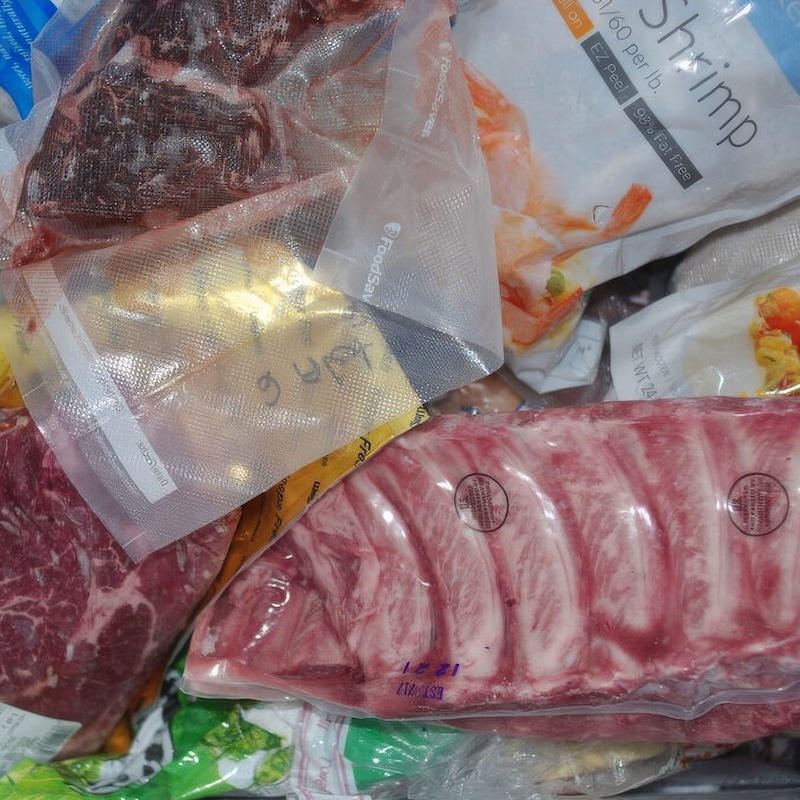
Have you ever looked in your freezer and found some meats or shrimp or leftovers that have been in there for a while and ask yourself, “I wonder how long I can freeze some of this stuff?”
I know I do and then I wished I dated it and wrote was was in the vacuum sealed freezer bag. I have stuff in my garage freezer chest that I have no idea if it’s chicken livers or sauteed mushrooms.
Even when I do write on the bag what it is, after a while the ink fades and I can’t read what I wrote. I guess that’s when it’s time to toss it.
What NOT to Freeze & Why
Before we look at ingredients and food’s recommended storage times, let’s look at foods you should not freeze for various reasons. Here they are:
| Food | Why You Shouldn’t Freeze It |
| Leafy Greens (e.g., lettuce, spinach) | High water content causes wilting, mushiness, and discoloration upon thawing. |
| Cream-based sauces | Cream and emulsified sauces tend to separate and curdle when frozen and thawed. |
| Soft cheeses (e.g., brie, cream cheese) | Texture becomes crumbly or grainy; water separates out. |
| Fried foods | Lose crispiness and become soggy due to moisture buildup during thawing. |
| Raw eggs in shell | Liquid inside expands, cracking the shell; can lead to contamination. |
| Cooked pasta (un-oiled) | Becomes mushy and clumps together when frozen without oil. |
| Mayonnaise | Emulsion breaks down, separating into oil and water. |
| Cucumbers | High water content leads to limp, soggy texture when thawed. |
| Watermelon & other melons | Becomes grainy and mushy due to ice crystal formation in watery flesh. |
| Potatoes (raw or boiled) | Raw: Turn black and gritty. Cooked: Become grainy and waterlogged. |
| Gravy (flour-thickened) | Separates and becomes watery when thawed; texture is often ruined. |
| Yogurt | Separation and grainy texture; not pleasant to eat as-is after freezing. |
| Sauces thickened with cornstarch | Separate and lose their thick consistency. |
| Pastries with custard fillings | Custard can split and become watery or rubbery. |
| Carbonated beverages | Expand and can explode in the freezer; lose carbonation upon thawing. |
| Gelatin-based dishes | Lose structure and become watery after thawing. |
| Sour cream | Texture becomes grainy and separated. |
| Cooked rice (improperly cooled) | Can develop bacteria if not cooled correctly; texture can be dry and crumbly. |
| Meringue toppings | Weep and become rubbery when thawed. |
| Dishes with raw potatoes | Potatoes darken and develop an unpleasant texture. |
Recommended Storage Times for Frozen Foods
These time period recommendations come from www.fda.gov, www.foodsafety.gov, https://ask.usda.gov/s/
| Category | Food Item | Recommended Freezer Time |
| Dairy and Eggs | Butter | 6–9 months |
| Cheese (hard) | 6 months | |
| Eggs (raw, not in shell) | 1 year | |
| Milk (not recommended to freeze) | Not recommended | |
| Fruits and Vegetables | Berries | 10–12 months |
| Citrus fruits | 3–4 months | |
| Broccoli, carrots | 12 months | |
| Tomatoes (not recommended to freeze) | Not recommended | |
| Meats | Steaks | 6–12 months |
| Ground beef | 3–4 months | |
| Pork chops | 4–6 months | |
| Lamb (chops or roast) | 6–9 months | |
| Seafood | Lean fish (e.g., cod) | 6 months |
| Fatty fish (e.g., salmon) | 2–3 months | |
| Shellfish (shrimp, scallops) | 3–6 months | |
| Cooked fish | 4–6 months | |
| Poultry | Whole chicken or turkey | 1 year |
| Chicken parts | 9 months | |
| Ground poultry | 3–4 months | |
| Cooked poultry | 4 months |
Key Freezer Storage Guidelines
Freezer Temperature: Maintain at 0°F (-18°C) or below.
Safety vs. Quality: While freezing keeps food safe indefinitely, quality may decline over time.
Packaging: Use airtight, moisture-resistant packaging to prevent freezer burn.
How to Freeze Foods to Reheat
I wrote a post about freezing food to reheat that you may be interested in and I’ll write more about this topic as I learn more.


