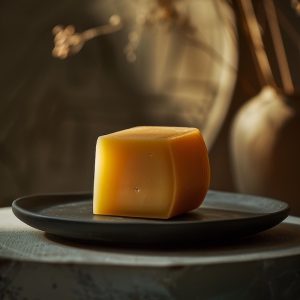
About Camembert Cheese
Camembert cheese is one of the most iconic French cheeses. Known for its creamy texture and earthy flavor, it has delighted cheese lovers for centuries.
Made from cow’s milk, Camembert boasts a soft, pale interior and a white, bloomy rind. Its rich aroma and buttery taste make it perfect for cheese boards, sandwiches, and baked dishes.
Originating in Normandy, France, authentic Camembert holds AOC (Appellation d’Origine Contrôlée) status. This designation guarantees traditional production methods and high-quality milk.
Whether raw or pasteurized, the milk is carefully cultured and aged for three to five weeks to develop its signature flavor. The rind, formed by Penicillium camemberti, is edible and adds a subtle, mushroom-like aroma that complements the creamy interior.
Camembert cheese is versatile in the kitchen. It melts beautifully, making it ideal for baked Camembert, sauces, and warm sandwiches. Paired with fruits, nuts, or a glass of wine, it elevates any culinary experience. Food enthusiasts and home cooks alike appreciate its balance of flavor and texture.
In this post, I explore the history, flavor profile, and culinary uses of Camembert cheese. You’ll discover tips for serving, pairing, and baking this classic French cheese. Camembert is more than cheese—it’s a taste of French tradition and craftsmanship.
Camembert’s Characteristics
Camembert cheese is known for its distinct characteristics, contributing to its unique flavor, texture, and overall appeal. Here are some key features that define Camembert:
| Characteristic | Details |
|---|---|
| Milk Source | Cow |
| Fat Content | Approx. 45% (in dry matter) |
| Texture | Soft, creamy, smooth |
| Aging | 3–5 weeks |
| Flavor | Buttery, earthy, slightly tangy, nutty |
| Aroma | Pungent, earthy, mushroom-like |
| Rind | White, bloomy, edible mold (Penicillium camemberti) |
| Interior | Soft, creamy, pale yellow |
| Size | Approx. 250g (small rounds), ~11 cm diameter |
| Versatility | Excellent for cheese boards, baking, melting, sandwiches |
| Region | Normandy, France |
| AOC/Protected Status | Yes, Appellation d’Origine Contrôlée (AOC) since 1983 |
| Milk Treatment | Raw or pasteurized cow’s milk |
| Coagulation Type | Rennet (lactic acid coagulation) |
| Shape | Round wheel |
| Color (Interior/Rind) | Pale yellow interior / White rind |
| Shelf Life | Approximately 3–4 weeks from production |
| Serving Temperature | Room temperature (20–22°C / 68–72°F) |
| Traditional Season | Available year-round, peak in late summer/fall |
| Diet of Cows | Grass-fed and hay; influences flavor and aroma |
| Culinary Uses | Baked Camembert, cheese boards, sandwiches, sauces, paired with fruits and wine |
Camembert Production
The production of Camembert follows a meticulous process that requires expertise and precision. High-quality, unpasteurized cow’s milk is carefully selected, and rennet and starter cultures are added to initiate the fermentation process.
The curds are then hand-ladled into molds and left to drain, allowing the cheese to develop its characteristic texture. After several weeks of aging and ripening, the Camembert wheels are ready to be enjoyed.
However, it is worth noting that the traditional production of raw milk Camembert has faced some challenges in recent years due to concerns over food safety. Many modern versions of Camembert are now made using pasteurized milk, ensuring the elimination of harmful bacteria. While the flavor profile may differ slightly, these variations still maintain the essence of Camembert’s creamy indulgence.
Camembert cheese has transcended its humble origins to become an internationally recognized culinary treasure. Its allure lies in its exceptional taste, delicate texture, and ability to transport eaters to the idyllic landscapes of Normandy.
Whether enjoyed simply with bread or used as a star ingredient in elaborate dishes, Camembert never fails to delight and captivate the senses, making it a cheese that continues to hold a special place in the hearts of cheese enthusiasts and food lovers around the globe.

What Foods and Wines to Pair with Camembert?
When it comes to pairing Camembert cheese, a variety of foods and wines can complement its rich and creamy flavors. Here are some popular choices for both food and wine pairings:
| Food Pairing | Description | Why It Works |
|---|---|---|
| Fresh Apples | Crisp, slightly sweet, and juicy apples like Honeycrisp or Gala. | The sweetness and acidity balance Camembert’s creamy, earthy flavor. |
| Pears | Soft, sweet pears such as Bartlett or Anjou. | Juicy and mellow, pears enhance the buttery texture without overpowering it. |
| Walnuts | Toasted or raw walnuts with a slightly bitter note. | The crunch and slight bitterness contrast the smooth, rich cheese. |
| Honey | Light or floral honey drizzled over the cheese. | Sweetness accentuates the creamy interior and softens the earthy rind flavor. |
| Baguette or French Bread | Fresh, crusty French bread or baguette slices. | The neutral, chewy texture provides the perfect base for spreading Camembert. |
| Red Wine | Fruity, light to medium-bodied wines like Pinot Noir or Beaujolais. | The acidity and fruit notes cut through richness and complement the earthy tones. |
| Figs | Fresh or dried figs with natural sweetness. | Enhances the creamy and nutty flavors while adding a chewy texture contrast. |
| Prosciutto | Thinly sliced, salty Italian cured ham. | Saltiness balances the cheese’s richness, creating a harmonious flavor combination. |
Serving Tips
Preparing Camembert for serving is a straightforward process that allows you to enhance its flavors and ensure an enjoyable dining experience. Here are the steps to prepare Camembert cheese:
- Choose the right Camembert: Select a Camembert cheese that is ripe but not overly runny. The cheese should be soft to the touch, and the rind should have a white, bloomy appearance. Avoid cheeses with an ammonia-like smell or ones that feel too firm.
- Remove the packaging: Take the Camembert, including any plastic wrap or paper, out of its packaging. It is best to allow the cheese to breathe and develop its flavors.
- Let it come to room temperature: To fully appreciate the flavors and texture of Camembert, let it sit at room temperature for about 30 minutes to an hour. This allows the cheese to soften and the flavors to intensify.
- Preheat the oven (optional): If you prefer to serve warm and gooey Camembert, you can bake it in the oven. Preheat the oven to around 350°F (175°C).
- Score the top: Using a sharp knife, gently score the top rind of the Camembert in a crisscross pattern. This helps the cheese melt more evenly if you plan to bake it.
- Bake (optional): Place the scored Camembert in a small ovenproof dish or a Camembert baker if desired. Bake in the preheated oven for about 15-20 minutes or until the cheese is melted and gooey. The baking time may vary, so keep an eye on it.
- Serve: Transfer the Camembert to a serving platter or board once it is ready. You can keep it in its original wooden box, remove the top rind, or leave it as is. Camembert can be served warm or at room temperature, depending on your preference.
- Accompaniments: Serve Camembert with an array of accompaniments that complement its flavors. Popular choices include crusty bread, sliced baguette, fresh fruits, nuts, honey, or charcuterie. Arrange the accompaniments around the Camembert, allowing guests to create their own combinations.
- Enjoy: Camembert is best enjoyed by scooping or spreading it onto the accompaniments. The creamy and indulgent cheese can be savored on its own or combined with the complementary flavors of the chosen pairings.

History
The history of Camembert cheese dates back to the late 18th century in Normandy, France. The creation of Camembert is attributed to Marie Harel, a farmer from the village of Camembert. Legend has it that Harel received a recipe from a priest who was seeking refuge during the French Revolution. This recipe said to originate from the Brie region, provided the foundation for what would become Camembert.
Marie Harel began producing Camembert cheese using raw cow’s milk and employing distinctive bloomy rind techniques. The bloomy rind refers to the white, downy exterior that develops on the surface of the cheese as it ripens. This rind results from the growth of the Penicillium candidum mold, which gives Camembert its characteristic flavor and appearance.
Initially, Camembert was primarily produced for personal consumption or sold locally. However, its popularity began to spread as visitors and travelers tasted and appreciated its unique qualities. Eventually, Camembert gained recognition beyond the region, and its production expanded to meet the growing demand.
In the 19th century, technological advancements, such as the development of the railroad, facilitated the distribution of Camembert to wider markets. The cheese gained popularity in Parisian bistros and cafes and became synonymous with French cuisine. Its reputation grew even further when Napoleon III reportedly fell in love with the cheese, solidifying its place in culinary history.
During World War I, Camembert played a significant role in French culture and morale. It became a symbol of national pride, and soldiers would receive parcels containing Camembert cheese from their loved ones back home. The cheese’s portability, nutritional value, and comforting taste provided a sense of familiarity and comfort during challenging times.
In the early 20th century, Camembert production faced a threat due to the devastation caused by World War II. Many cheese factories were destroyed, and the tradition of artisanal cheese-making was at risk. However, the producers revived the industry with determination and resilience, and Camembert flourished again.
Today, Camembert cheese is renowned globally and remains an iconic representation of French gastronomy. While the traditional production of raw milk Camembert has faced challenges due to concerns over food safety, pasteurized versions have become more common. These variations aim to eliminate harmful bacteria while maintaining the essence of Camembert’s creamy indulgence.
Despite its evolution, the spirit of Camembert cheese perseveres, and it continues to be appreciated for its rich history, distinctive flavor, and the skill and craftsmanship required for its production. Whether enjoyed in its traditional form or incorporated into modern culinary creations, Camembert cheese stands as a testament to the enduring legacy of French cheese-making and the cultural significance of this beloved dairy delicacy.
Top Producers of Camembert
Camembert cheese is produced by various cheesemakers and companies around the world. These producers, among others, have established themselves as leaders in the Camembert cheese industry, upholding the traditions and quality of this beloved cheese.
Their commitment to using high-quality ingredients and maintaining artisanal techniques ensures the production of exceptional Camembert for cheese lovers to enjoy. While there are numerous producers, here are some well-known and respected names in the realm of Camembert:
- Fromagerie de Camembert: This producer, located in the village of Camembert in Normandy, France, carries on the traditional craftsmanship of Camembert production. They continue to produce authentic Camembert using traditional methods and high-quality milk.
- Isigny Sainte-Mère: Isigny Sainte-Mère is a renowned dairy cooperative based in Normandy, France. They are known for producing a range of dairy products, including Camembert. Their Camembert is made from the rich milk of Normandy cows and follows strict quality standards.
- Le Chatelain: Le Chatelain is a well-respected cheesemaker in the Camembert region of Normandy, France. They specialize in producing Camembert using traditional methods, and their cheese is recognized for its quality and distinct flavor.
- President: President is a prominent French cheese brand that produces various kinds of cheese, including Camembert. They have been crafting cheeses since 1933 and are known for their consistent quality and expertise in cheese-making.
- Le Rustique: Le Rustique is a popular brand that produces Camembert cheese in France. They are recognized for their rich and creamy Camembert, which is carefully aged to develop its distinct flavors and textures.
- Lactalis: Lactalis is a global dairy company that produces various dairy products, including Camembert. They have several brands under their umbrella, such as Président and Société, offering Camembert cheese to consumers worldwide appreciate.