
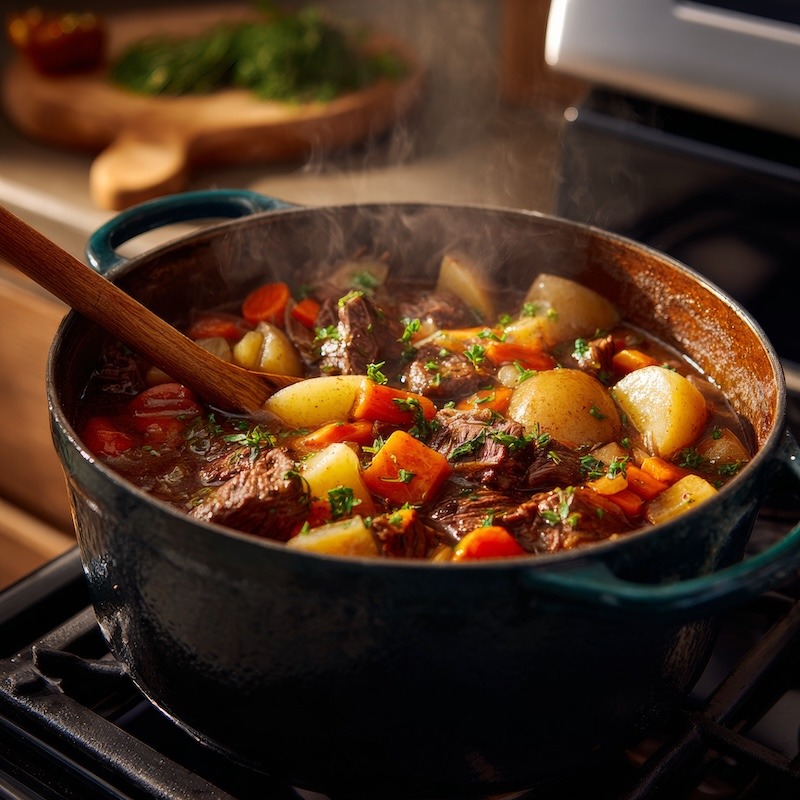

Stews are comfort in a bowl—but getting them rich, flavorful, and foolproof isn’t always obvious. If you’ve ever had a watery pot or tough meat, this guide breaks down the techniques that turn any ingredients into a slow-simmered triumph. Learn how to build depth, balance flavors, and make stews you’ll actually want for leftovers too.
Why Stewing Is an Important Cooking Technique
- Transforms tough ingredients – Slow, moist heat breaks down connective tissue, turning inexpensive cuts of meat and hearty vegetables tender and flavorful.
- Builds deep, layered flavor – Browning, deglazing, and long simmering concentrate aromatics into a rich, unified sauce.
- Forgiving and flexible – Stewing tolerates timing variations, ingredient swaps, and imperfect knife work without punishing the cook.
- Maximizes efficiency – One pot, minimal hands-on time, and excellent leftovers make stewing ideal for home cooks.
- Foundational technique – Mastering stewing unlocks countless global dishes and builds intuition for braising, soups, and slow cooking.
The Only Guide to Stewing You’ll Ever Need (With Pro Tips)
Stewing is one of the most powerful techniques a home cook can master because it turns time and patience into flavor. When you stew food, you cook ingredients slowly in liquid at a gentle temperature, allowing tough cuts of meat to become tender, vegetables to absorb seasoning, and sauces to develop deep, layered complexity.
This method rewards simplicity and precision rather than speed, making it ideal for everyday cooking and confident improvisation. Cooks around the world rely on stewing because it works with affordable ingredients, requires minimal equipment, and delivers consistent results.
Whether you stew beef, chicken, seafood, legumes, or vegetables, the same principles apply: controlled heat, sufficient liquid, and enough time for transformation to occur. Learning how to stew anything builds foundational cooking skills that extend to braising, soups, and slow cooking. Once you understand the technique, you stop following recipes blindly and start cooking with intention, intuition, and confidence.
How to Stew: The Core Method
- Prepare and season ingredients – Cut proteins and vegetables into uniform, bite-sized pieces and season generously.
- Brown for flavor – Sear proteins in fat until deeply golden, then remove and reserve.
- Build the flavor base – Sauté aromatics in the same pot, allowing them to soften and lightly caramelize.
- Deglaze the pot – Add liquid to dissolve browned bits stuck to the bottom. This forms the foundation of the stew.
- Submerge and simmer – Return ingredients to the pot, add enough liquid to cover, then simmer gently.
- Cook low and slow – Maintain a steady simmer until ingredients are tender and flavors unify.
- Adjust and finish – Skim excess fat, thicken if needed, and correct seasoning before serving.
| Ingredient Type | Recommended Temperature | Typical Stewing Time | Why It Works |
|---|---|---|---|
| Tough Beef Cuts (Chuck, Shank) | 180–200°F (gentle simmer) | 2–3 hours | Extended low heat breaks down collagen into gelatin, creating tenderness and body. |
| Pork Shoulder | 180–195°F | 2–2½ hours | Slow cooking softens connective tissue without drying the meat. |
| Lamb (Shoulder, Shanks) | 180–200°F | 2–3 hours | Fat and collagen render gradually, enriching the stew. |
| Dark Meat Poultry (Thighs, Legs) | 175–185°F | 45–75 minutes | Moist heat preserves juiciness while fully cooking connective tissue. |
| Root Vegetables | 180–190°F | 30–60 minutes | Starches soften while absorbing surrounding flavors. |
| Legumes (Beans, Lentils) | 180–190°F | 45–90 minutes | Gentle heat prevents splitting and ensures even hydration. |
| Seafood (Firm Fish, Shellfish) | 160–170°F | 5–15 minutes | Short cooking time prevents overcooking and preserves texture. |

Best Ingredients for Stewing
Proteins That Love the Slow Simmer
- Tougher cuts like beef chuck, pork shoulder, lamb shanks
- Poultry dark meat (thighs and legs)
- Seafood chunks and firm fish
Why these? Long cooking breaks down connective tissue, turning chew into chew-worthy tenderness and flavor.
Veggies & Add-ins That Stew Well
- Root veggies: carrots, potatoes, parsnips
- Aromatics like onions, garlic, leeks
- Beans or lentils for body
- Fresh herbs like rosemary and bay leaves
All these absorb flavor while contributing texture and color.
Equipment That Makes a Difference
- Dutch oven: Classic choice for even heat and depth
- Slow cooker: Great for hands-off stews
- Heavy pot with a tight lid if neither of the above
Each keeps moisture circulating, which is essential to great stewing.
Why Stewing Works (and Deliciously So)
Stewing turns humble ingredients into something rich and comforting because:
- Slow simmering breaks down tough fibers
- Moist heat infuses aromatics into every bite
- Liquids carry flavor and become a natural sauce
No wonder this technique has fed cultures for centuries.
Bonus: Common Mistakes to Avoid
- Too hot: Rapid boil turns tender cuts tough
- Too little liquid: Ingredients steam, not stew
- Skipping the brown: You miss major flavor layers
Avoid these and your stew will be memorable.
Classic Stews From Around the World
| Stew Dish | Description | Country of Origin |
|---|---|---|
| Boeuf Bourguignon | Beef braised in red wine with onions, mushrooms, and bacon, creating a rich, deep flavor. | France |
| Irish Stew | A hearty lamb or mutton stew with potatoes, onions, and sometimes carrots, slow-cooked for tenderness. | Ireland |
| Beef Goulash | Beef stew seasoned with paprika and onions, often with potatoes or dumplings. | Hungary |
| Chili Con Carne | Spicy stew of ground beef, beans, tomatoes, and chili peppers. | Mexico / United States (Tex-Mex) |
| Bun Rieu | Vietnamese tomato-based crab and pork stew served with rice noodles. | Vietnam |
| Navarin d’Agneau | Lamb stew with spring vegetables like turnips, carrots, and onions, slowly cooked in a light sauce. | France |
| Feijoada | Black bean stew with pork and beef, flavored with garlic, onions, and spices. | Brazil |
| Ragout | Generic French-style stew with meat, vegetables, and a thick, flavorful sauce. | France |
| Khoresht | Persian stew often made with meat, vegetables, herbs, and sour flavors like lemon or pomegranate. | Iran |
| Cocido | Traditional Spanish stew of meats, sausages, chickpeas, and vegetables, cooked slowly for depth of flavor. | Spain |

Frequently Asked Qustions About Stewing
What is stewing in cooking?
Stewing is a moist-heat cooking technique where small, uniform pieces of food are fully submerged in liquid and cooked slowly at a gentle simmer. The goal is to tenderize ingredients while developing a rich, cohesive sauce.
What foods are best for stewing?
Stewing works best with tougher cuts of meat like beef chuck, pork shoulder, and lamb shanks, as well as dark-meat poultry, root vegetables, legumes, and hearty vegetables. These ingredients benefit from long, slow cooking.
What temperature should a stew cook at?
A stew should cook at a gentle simmer, typically between 180–200°F. Boiling is too aggressive and can make meat tough and vegetables mushy.
How long does stewing take?
Stewing times vary by ingredient. Tough meats usually take 2–3 hours, poultry 45–75 minutes, vegetables 30–60 minutes, and seafood only a few minutes. Time is essential for collagen breakdown and flavor development.
Do you have to brown meat before stewing?
Browning meat is not required, but it is strongly recommended. Searing develops flavor through caramelization and creates fond, which deepens the final stew.
What liquid should I use for stewing?
Common stewing liquids include stock, broth, wine, beer, water, or a combination. The liquid should complement the main ingredient and provide enough volume to fully submerge the food.
What’s the difference between stewing and braising?
In stewing, ingredients are fully submerged in liquid and cut into smaller pieces. In braising, larger cuts are only partially submerged. Both use low, slow heat, but stewing produces a more unified dish.
Can you stew vegetables without meat?
Yes. Vegetable stews rely on aromatics, spices, and proper timing to build flavor. Adding ingredients in stages prevents overcooking and preserves texture.
Why did my stew turn out tough?
Stews turn tough when cooked at too high a temperature, not long enough, or with lean cuts of meat. A gentle simmer and sufficient time are essential.
How do you thicken a stew?
Stews can be thickened naturally through reduction, or by adding flour, cornstarch slurry, beurre manié, mashed vegetables, or legumes.
Is stewing better on the stovetop or in the oven?
Both work well. The oven provides more even heat and reduces scorching, while the stovetop allows easier monitoring. The key is maintaining a steady, gentle simmer.
Does stew taste better the next day?
Yes. Resting allows flavors to meld and deepen as fats, proteins, and aromatics settle into balance.
A Little Stew History
Stewing has ancient roots, dating back thousands of years. Early humans discovered that slow-cooking food over low heat made it tender and flavorful. In ancient cultures, people would simmer meat, vegetables, and grains in a pot over an open fire. This method was practical, allowing them to cook tougher cuts of meat and create meals that could feed many.
Throughout history, stewing has become a staple in many cuisines worldwide. In medieval Europe, stews were common in households and inns. They were made with whatever ingredients were available, making stews a versatile and cost-effective option.
As time went on, stews evolved. Different cultures added twists using spices, herbs, and local ingredients. In France, for example, stews like boeuf bourguignon became iconic, showcasing the art of slow-cooking with wine and aromatics.
Stewing remained a popular cooking method because it was simple and produced rich, hearty meals. Even today, stews are loved for their ability to bring out deep flavors and transform inexpensive ingredients into comforting dishes.


2 Responses
This was very helpful! Thank you!! 🙂
So helpful! Making stew has always been a challenge for me.