Classic Tiramisu Recipe (No Baking, No Fuss, Authentic Flavor)

Tiramisu isn’t just dessert—it’s coffee-soaked, creamy, indulgent perfection that makes any dinner feel like a celebration. Forget dry, bland puddings; this recipe shows you how to layer, chill, and dust your way to Instagram-worthy decadence. Ready to wow taste buds with effortless elegance? 🍰

Why This Recipe Works

  • Brief coffee dips flavor the ladyfingers without turning them soft or collapsing the layers.
  • Mascarpone folded gently keeps the cream light, airy, and stable instead of dense.
  • Cocoa added last stays aromatic and balanced, preventing harsh bitterness from developing.

Real Italian Tiramisu, Explained: Why This Version Always Works

Tiramisu rewards restraint more than effort. The dessert fails when the coffee soaks for too long, the cream overworks, or the layers rush the chill. This version avoids those problems by controlling timing, texture, and balance rather than adding extra steps.

Brief dips flavor the cake without collapsing. Gentle folding keeps the mascarpone light instead of heavy. Cocoa finishes the dessert at the right moment, not the beginning. The result tastes rich but stays clean, sliceable, and composed, exactly how tiramisu should behave.

Tiramisu Rules

  • Dip, don’t soak the ladyfingers to prevent soggy layers.
  • Fold mascarpone gently and stop early to keep the cream light.
  • Chill to set, not to stiffen, so the dessert slices clean.
A cleanly sliced tiramisu in a shallow ceramic dish reveals airy mascarpone cream layered with lightly coffee-dipped ladyfingers, finished with a fresh dusting of cocoa
Print Recipe
5 from 1 vote

Tiramisu Recipe

A classic version of tiramisu from the slopes of Deer Valley, Utah
Prep Time5 minutes
Cook Time45 minutes
Total Time50 minutes
Course: Dessert
Cuisine: Italian
Keyword: tiramisu
Servings: 10 people

Equipment

Ingredients

  • 8 egg yolks
  • 1 cup sugar
  • ½ cup dark rum
  • ½ cup cold water
  • splash Amaretto
  • lbs mascarpone
  • 36 ladyfingers
  • 2 cups coffee reduction or espresso
  • splash Kahlua
  • chocolate shavings optional

Instructions

Prepare the Zabaglione

  • In a heatproof bowl over a simmering water bath (or use a double boiler), whisk together 8 egg yolks, 1 cup sugar, ½ cup dark rum, ½ cup cold water, and a splash of Amaretto.
  • Whisk constantly until the mixture becomes thick, pale, and ribbon-like when you lift the whisk—this is your zabaglione.
    Tip: Make sure the bottom of the bowl doesn’t touch the water—gentle steam is all you need. This prevents the eggs from scrambling.

Cool the Zabaglione

  • Remove the bowl from the heat and place it over an ice bath to cool slightly. Stir occasionally to prevent a skin from forming.

Combine with Mascarpone

  • Once cooled, gently fold in 2½ lbs mascarpone cheese until smooth and well incorporated.
    Tip: Avoid overmixing—overmixing can cause the mascarpone to break and become grainy. A few gentle folds with a spatula are enough.

Prepare the Coffee Reduction

  • Simmer 4 cups of strong coffee over medium heat until reduced by half. Let it cool, then stir in a splash of Kahlua.
    Tip: You can use espresso for a stronger coffee flavor. Make sure the mixture is completely cooled before soaking the ladyfingers to prevent them from falling apart.

Line the Pan

  • Line a 10-inch springform pan with parchment paper on the bottom and sides. If you don’t have a springform pan, a 10-inch casserole dish works too—just be aware it may not unmold as neatly.

Assemble the First Layfinger Layer

  • Place a layer of ladyfingers, flat side down, at the bottom of the pan, leaving a 1-inch gap along the edges. This gap is for the upright ladyfingers that will line the sides later.
  • Using a pastry brush, soak each ladyfinger lightly with the cooled coffee reduction.
    Tip: Don’t oversoak; ladyfingers should be moist but not soggy.

Pipe the Mascarpone Cream

  • Fill a pastry bag with the mascarpone mixture. Pipe ropes of cream to fill the gap around the ladyfingers and cover the tops of the first layer of ladyfingers.
    Tip: This creates stability for the upright ladyfingers and ensures every bite has creamy goodness.

Add the Upright Ladyfingers

  • Place ladyfingers upright along the edge of the pan, sugar side out, pressing gently into the cream and snug against one another.

Build the Second Layer

  • Place another layer of ladyfingers flat on top of the cream. Cut them as needed to fit perfectly.
  • Brush with coffee reduction. Pipe another layer of mascarpone cream over this layer and smooth with a spatula.
    Tip: Take your time arranging ladyfingers—neat layers make for a beautiful presentation, but taste won’t suffer if they’re a bit rustic.

Chill

  • Cover and refrigerate overnight (at least 6 hours) to allow flavors to meld and the tiramisu to set.

Unmold & Serve

  • Remove the springform collar carefully. Top with chocolate shavings if desired.
    Tip: If using a casserole dish, scoop portions directly—presentation won’t be as fancy, but taste remains perfect.

Notes

Not a lot of prep for this recipe. It's more of a let's get started. You will have to make the coffee reduction or espresso.
What Is Tiramisu?

Tiramisu is a popular Italian dessert made of layers of ladyfingers (a type of sweet, sponge-like biscuit) soaked in coffee and brandy or liqueur, and a creamy filling made of mascarpone cheese, eggs, sugar, and sometimes cream. The dessert is typically chilled in the refrigerator before serving, which allows the flavors to meld together and the ladyfingers to soften slightly.

The name “tiramisu” literally means “pick me up” or “lift me up” in Italian, and it is said that the name refers to the dessert’s ability to provide a boost of energy, thanks to the caffeine in the coffee and the sugar in the filling.

The traditional recipe for tiramisu includes the use of raw eggs, which can pose a risk of foodborne illness if the eggs are not fresh or if they are not handled properly. However, many modern recipes call for the eggs to be cooked or replaced with a mixture of egg yolks and sugar, which eliminates this risk. Additionally, some recipes call for the use of cream instead of mascarpone cheese, or for the addition of chocolate or other flavors to the filling.

Making and Serving Tiramisu

To make tiramisu, the ladyfingers are typically dipped in a mixture of coffee and brandy or liqueur, then arranged in layers in a dish. The creamy filling (zabaglione) made of mascarpone cheese, eggs, sugar, and sometimes cream, is spread over the ladyfingers, and then another layer of ladyfingers is added on top. The dessert is then chilled in the refrigerator for several hours or overnight, allowing the flavors to meld together and the ladyfingers to soften slightly.

When it’s ready to serve, it’s dusted with cocoa powder or grated chocolate on the top.

Tiramisu can be served in individual cups or glasses, or in a large dish to be cut into slices. It is typically garnished with cocoa powder or grated chocolate on top, and it is best served chilled.

Tiramisu is a delicious and versatile dessert that can be enjoyed any time of year. Its combination of flavors and textures makes it a crowd-pleaser and a great option for special occasions or simply as a treat.

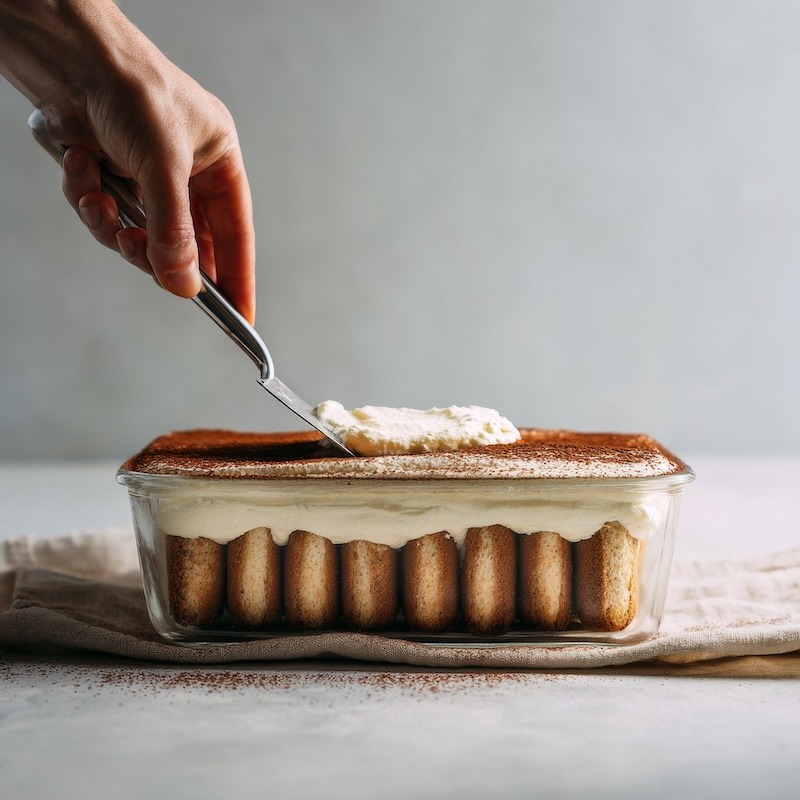
Assembling tiramisu in a rectangular glass dish, with a neat layer of coffee-soaked ladyfingers at the bottom and smooth mascarpone cream being gently spread on top, set on a clean countertop with soft natural light and a neutral Italian kitchen background.

Variations

Variations of tiramisu are endless, you can add flavor to the cream by using vanilla, or a liqueur like amaretto, or add some fruits like strawberries or blueberries for a fresh twist. You can also make it gluten-free by using gluten-free ladyfingers or make it vegan by using vegan cream cheese and egg substitute.

Overall, tiramisu is a classic Italian dessert that has stood the test of time. Its combination of flavors and textures make it a favorite among many and its versatility allows for endless possibilities of variations.

Variation Description Why It Works
Chocolate Tiramisu Add layers of melted dark chocolate or chocolate ganache between the mascarpone layers. Deepens the flavor and adds richness for chocolate lovers.
Berry Tiramisu Replace coffee with berry syrup and add fresh berries between layers. Adds a fresh, tart contrast to the creamy filling.
Lemon Tiramisu Use lemon curd and limoncello instead of coffee and cocoa. Offers a bright, citrusy twist for a refreshing version.
Matcha Tiramisu Dust with matcha powder and soak ladyfingers in green tea. Gives an earthy, slightly bitter balance to the sweet cream.
Alcohol-Free Tiramisu Skip the liqueur and use extra espresso or decaf coffee instead. Keeps the flavor kid-friendly and safe for all guests.
Pumpkin Tiramisu Add pumpkin purée and pumpkin spice to the mascarpone mixture. Perfect for fall and holiday gatherings with a cozy twist.
Nutella Tiramisu Swirl Nutella into the cream or spread between layers. Adds a hazelnut-chocolate flavor that's indulgent and rich.
Fresh golden ladyfingers neatly stacked on a wooden cutting board, showing their soft interior and slightly crisp edges, photographed in warm natural light with a neutral kitchen background, ready for use in tiramisu preparation.
Lady Fingers For Classic Tiramisu

Frequently Asked Questions

What is traditional tiramisu made of?

Traditional tiramisu uses ladyfingers dipped briefly in coffee, a mascarpone-based cream, eggs, sugar, and cocoa powder. Classic versions rely on technique rather than baking to create structure, flavor, and balance.

Does tiramisu contain raw eggs?

Yes, most traditional tiramisu recipes use raw or gently tempered eggs. Using very fresh, high-quality eggs and proper handling reduces risk. Some versions substitute whipped cream or use pasteurized eggs for extra safety.

Can I make tiramisu without raw eggs?

Yes. You can replace the eggs with lightly sweetened whipped cream or use pasteurized liquid eggs. The texture will be slightly different but still rich and stable when folded gently.

Why is my tiramisu watery?

Watery tiramisu usually comes from over-soaked ladyfingers, overmixed cream, or insufficient chilling time. Brief coffee dips and gentle folding prevent excess moisture from breaking the structure.

How long should I dip the ladyfingers in coffee?

Dip each ladyfinger quickly, about one second per side. The goal is to flavor the cake without allowing it to absorb enough liquid to collapse.

Can I make tiramisu ahead of time?

Yes. Tiramisu improves with time. Making it 12 to 24 hours ahead allows the layers to set and flavors to meld while keeping the texture light.

How long does tiramisu need to chill?

Chill tiramisu for at least 4 hours, though overnight is ideal. This allows the cream to firm just enough for clean slicing without becoming stiff.

Can tiramisu be frozen?

Tiramisu can be frozen, but the texture may change slightly when thawed. For best results, freeze tightly wrapped and thaw slowly in the refrigerator.

Why do you add cocoa powder last?

Adding cocoa just before serving keeps its flavor aromatic and prevents bitterness from developing as it absorbs moisture during chilling.

What kind of coffee is best for tiramisu?

Strong brewed espresso or dark coffee works best. Avoid weak or flavored coffee, which can flatten the dessert’s flavor.

Can I use instant coffee?

Yes, as long as it’s mixed strong. Instant espresso powder dissolved in hot water is often preferred for its consistency.

Can I use cream cheese instead of mascarpone?

Cream cheese can be used in a pinch, but it creates a firmer, tangier result. Mascarpone delivers the soft, clean richness traditional tiramisu relies on.

Why is my mascarpone mixture dense or grainy?

Overmixing causes mascarpone to break and turn dense. Fold gently and stop as soon as the mixture looks smooth and airy.

Is tiramisu gluten-free?

Traditional ladyfingers contain wheat. You can make tiramisu gluten-free by using gluten-free ladyfingers or sponge cake.

How long does tiramisu last in the refrigerator?

Tiramisu keeps well for up to 3 days when tightly covered and refrigerated. Flavor often improves by the second day.

What pan size works best for tiramisu?

An 8×8-inch or 9×9-inch dish works well for most home recipes, providing balanced layers without excess weight.

Can I make tiramisu without alcohol?

Yes. Alcohol is optional. Simply omit it or replace it with additional coffee for flavor.

What Is Zabaglione?

Zabaglione (also known as sabayon in French) is a traditional Italian dessert made from egg yolks, sugar, and a sweet wine such as Moscato or Marsala. It is typically made by whisking the ingredients together over a double boiler until they become light and frothy. The mixture is then served warm, often as a sauce over fruit or as a filling for pastries.

The dessert is rich and custardy, with a delicate sweet flavor and a light, airy texture. The wine used in the recipe gives it a unique taste and aroma. Zabaglione can be served in a number of ways, such as in a glass, on a plate with fresh fruits, or as a filling for pastries.

Zabaglione is a classic dessert that has been enjoyed in Italy for centuries. It is considered a specialty of the Piedmont region of Italy, where it is often served as a dessert in its own right, or as a topping for fruit or as an accompaniment to pastry.

It is easy to make and it is a great dessert to serve as a special treat or for a dinner party. It is a custardy and versatile, it can be flavored with different liqueurs, vanilla, or chocolate.

Zabaglione is also a popular dessert in France, where it is known as sabayon. In France, it is often served as a sauce for fruit or as a filling for pastries, and it is considered a classic French dessert.

Zabaglione in Tiramisu

In traditional tiramisu recipes, Zabaglione is used as a component of the creamy filling. The eggs yolks and sugar are whisked together until they are pale and thick, then the sweet wine is added and the mixture is heated over a double boiler while whisking until it thickens. This forms the custardy base of the filling.

The mascarpone cheese is then added to the zabaglione mixture and is gently folded in until it is smooth and well combined. The mixture is then layered between the ladyfingers and coffee mixture in the dish.

The zabaglione in tiramisu gives a rich, custardy flavor and a light, airy texture to the filling, and its sweetness is balanced by the coffee and liqueur used to soak the ladyfingers. The use of Zabaglione in tiramisu helps to make the filling more delicious and creamy, and it also helps to lighten the texture of the dessert.

Zabaglione is used in traditional tiramisu recipes as a component of the creamy filling, it gives a rich, custardy flavor, and a light, airy texture to the dessert, and it helps to balance the sweetness of the filling with the coffee and liqueur used to soak the ladyfingers.

History

The origins of tiramisu are somewhat debated, with differing claims about who invented the dessert and where it originated. Some sources claim that it was invented in the Veneto region of Italy in the 1960s by a pastry chef named Roberto Linguanotto, while others suggest that it has been a traditional Italian dessert for centuries.

However, it is widely agreed that the dish became popular in the 1980s and 1990s and it is now a staple in Italian restaurants around the world. The exact origins of the dish and who first made it, is still a mystery.


My Experiences

The first time we made it, we prepared the Zabaglione by whisking over a bowl of hot water, and it took forever. The second time, we put the mixing bowl in a pan of water and kept it on the stove, and it went much faster. You could also use a double boiler.

This method of heating the ingredients in a double boiler is called bain-marie. Not only will it speed up the cooking process, but it should also help reduce the risk of salmonella. You will whisk everything over simmering water just below the boiling point.

3 Responses

  1. 5 stars
    This is THE BEST Tiramisu recipe I have ever made! It is the only one I will ever make again. Thank you!

  2. Feels like something must be missing. My “cream” turned out much too liquid, and I had to fold in quite a bit of whipped cream to get a proper cream consistency. Did I miss something? In no way did the whisked “egg yokes, rum, Amaretto, sugar, and water” come out “thick and ribbony,” which makes sense, given that most of them are heavily liquid ingredients. From there, it never got to a cream state.

Leave a Reply

Your email address will not be published. Required fields are marked *

Recipe Rating


This site uses Akismet to reduce spam. Learn how your comment data is processed.